Perusta sinäkin oma Blogaaja.fi blogi ilmaiseksi >>
Lainaa.com

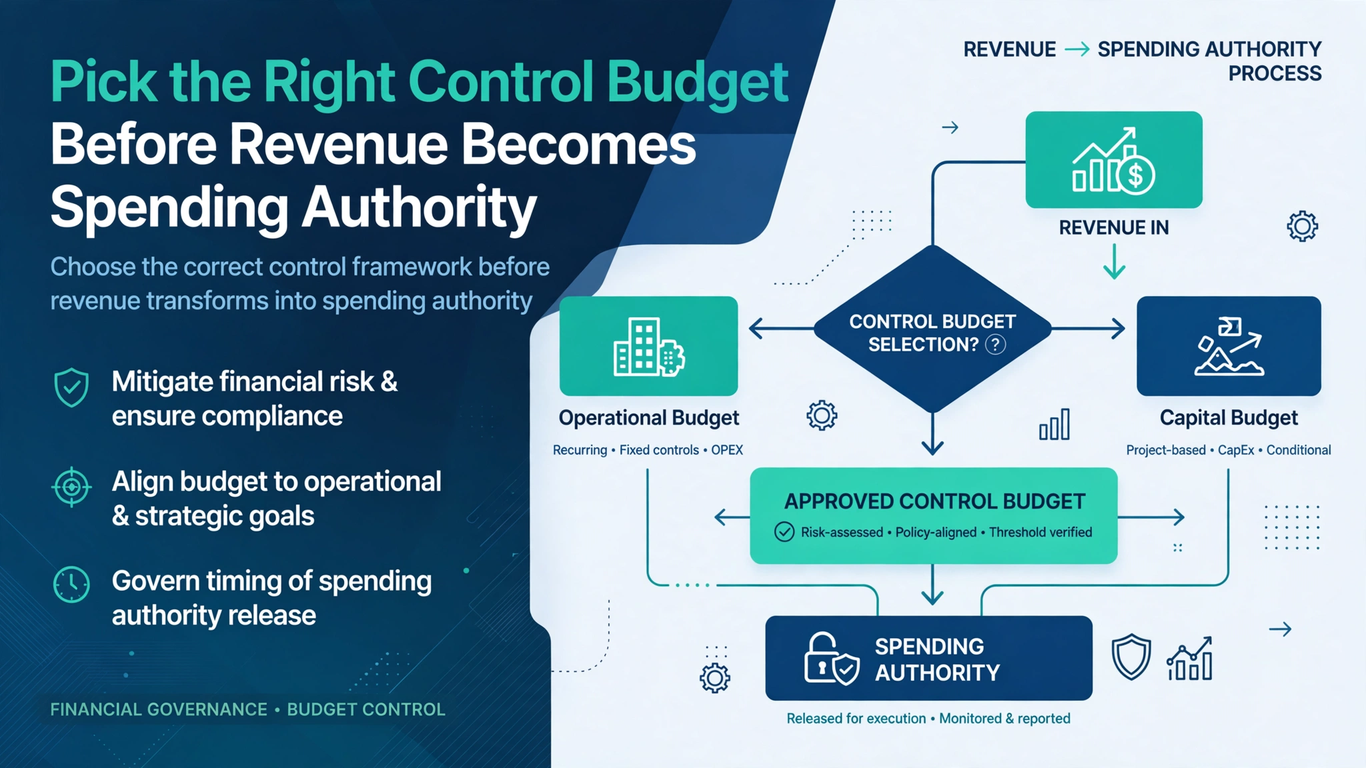
Pick the Right Control Budget Before Revenue Becomes Spending Authority

Introduction

Imagine a public library system that funds its outreach expenses with grant revenue. At Soft Online Training, we use scenarios like this to show learners how one small setup choice can change where the money ends up. The library keeps two control budgets for different grant years, and both feed planning scenarios with nearly identical names.

A scheduled process turns new revenue into an expense budget, but if nobody tells it which control budget to use, the team can’t be sure where the amount landed. That’s why this case works so well in Oracle Fusion Financials Training in Chennai: it shows how a routing choice decides where spending authority really goes. 

Start With the Funding Rule, Not the Process Screen

Before anyone runs a process, write down the policy that turns revenue into budget authority. Note the revenue source, the eligible expense purpose, the percentage or amount rule, the account structure, the budget period, the control budget, and who approves it. In the library example, current-year grant receipts can fund outreach supplies, while prior-year receipts stay restricted to closeout costs. The program labels look alike, but the funds are not interchangeable.

The process should carry out an approved rule, not pick whichever rule seems convenient. The budget owner should be able to say why this revenue belongs to this control budget and which expense scenario should receive it.

Next, build a source control total for the run. List the eligible revenue, the exclusions, the adjustments, the rule calculation, and the budget entry you expect. Tie that population back to the revenue records before you automate anything. Watch for reversals, duplicate extracts, late postings, and revenue that falls outside the grant period. A control budget parameter narrows the destination, but it can’t tell you whether the source data is complete and valid. Eligibility and destination are two separate questions, and both need a reviewer.

Choose the Control Budget on Purpose

The Create Budget Entry from Revenue process has a Control Budget parameter. It lines up the revenue-based expense budget amounts with the control budget you pick and its matching scenario, for both Budgetary Control and General Ledger. When several control budgets exist, treat that parameter as a deliberate routing decision. Confirm the budget name, the ledger and calendar, the period status, the scenario relationship, and the funding rule. Don’t choose by a familiar prefix. A current-year and a prior-year budget can differ by a few characters and still govern completely different funds.

Oracle’s documentation says the parameter isn’t required. That doesn’t make it unimportant. Find out what a blank value means in your configuration and whether that behavior is predictable enough for an unattended run. With multiple control budgets, an explicit choice helps make sure entries are created or updated only for the budget and scenario you intended. If you truly need to leave it blank, document the reason and test the scope. Defaults and operator habit shouldn’t quietly decide where spending authority gets created.

Check Every Schedule That Calls the Process

Because no separate enablement step is needed, existing schedules and scripts deserve attention right away. Take inventory of recurring jobs, job sets, external orchestration tools, run books, and saved favorites that invoke the process. Record each one’s current parameters and business owner.

A schedule built when only one control budget existed can become risky once a second one appears. Where policy calls for it, update the automation to pass the intended value explicitly, get the change approved, and test it in a representative environment. Also keep in mind that ”no new access needed” doesn’t mean nobody needs to govern who can edit schedules or submit budget activity. That kind of control thinking is what a good Oracle Fusion Financials Training in Chennai course should build into its labs.

Predict the Entry Before You Run It

Before running anything, build an expected-results table: control budget, scenario, period, account, source revenue, funding-rule calculation, expected expense amount, rounding treatment, and the existing balance, to separate a new entry from the cumulative total. If a rule makes eighty percent of a grant receipt available, expect that calculated increase, not the full authority afterward. Test the edges: a period-boundary posting, an excluded account, a reversal, and a small amount that exercises rounding. A destination can be right at budget level yet wrong by account or period. For rejected lines, reconcile accepted, rejected, and unprocessed amounts to the source total, and never add a rejected amount by hand until you know why. 

Reconcile Both Budget Destinations 

After the process finishes, check the entry and its status in Budgetary Control, confirming the control budget, scenario, period, account, amount, and source request. Then verify the matching result in General Ledger. A completed status only means the program ended, not that every expected line reached both places or that nothing unintended was created. Compare counts and totals, investigate exceptions, and keep the request logs. Also reconcile the other control budget: current-year grant revenue should raise only current-year authority, leaving the prior year untouched. Finally, plan for duplicates, and if a run times out, inspect the current state before assuming it failed. 

Make Exceptions Visible to Budget Owners

Give someone ownership of each exception type: mismatched scenarios, rejected accounts, closed periods, unexpected zero entries, and differences between Budgetary Control and General Ledger. Set resolution dates based on when spending decisions depend on that authority. Don’t cover a routing error with a second manual entry unless policy allows a documented correction and the original error is reversed or resolved.

Budget managers should get the source-to-entry reconciliation, not just a process log. They need to know which revenue created the authority, under which rule, in which budget, and whether the money is really available to spend.

Conclusion: What Oracle Fusion Financials Training in Chennai Learners Should Practice

Spending authority built from revenue needs a destination as carefully controlled as its calculation. Define the funding rule, reconcile the eligible revenue, pick the control budget deliberately, and confirm the matching scenario before you submit. Review schedules and scripts that may skip the new parameter, predict the entry at account and period level, and reconcile in both budget systems while proving the neighboring budget didn’t change.

A strong Oracle Fusion Financials Training in Chennai exercise would include two plausible grant-year destinations and a retry. That forces learners to show explicit routing, awareness of duplicates, and a complete trail from revenue evidence to usable expense authority. 
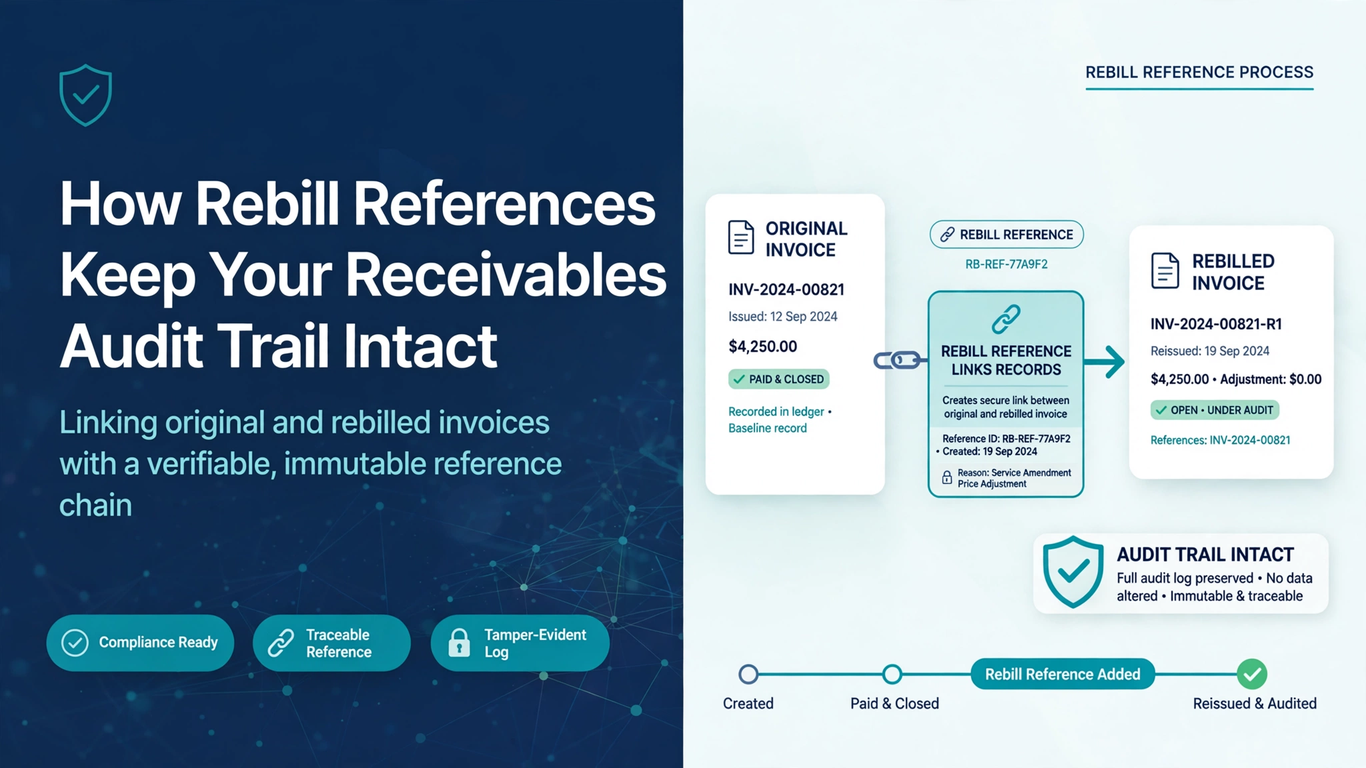
How Rebill References Keep Your Receivables Audit Trail Intact

Introduction

Picture a billing specialist who finds that a completed $48,000 invoice carried the wrong tax classification. At Tech Leads IT, we use this case to show why a credit memo and a corrected invoice need a clear link back to the original. The customer already has the invoice, so unlinked documents become a puzzle months later.

Oracle Cloud Financials Online Training should teach learners to pick the right source, record the reason for the change, and complete each document in order. Oracle Cloud Financials Training Online should do the same, so any reviewer can follow the chain without asking anyone. 

What Oracle Cloud Financials Online Training Should Teach About Planning a Correction

Before anyone creates a document, write a short correction record. It should say what is wrong, what is still valid, who approved the remedy, and which transaction is affected. In our example, the customer, quantity, price, and contract terms all stay the same. Only the tax treatment, and therefore the total, needs to change. Writing that down keeps the rebill from turning into a chance to sneak in unrelated commercial edits.

Capture the basics too: the original transaction number, business unit, bill-to account, currency, completion status, disputed amount, and the credit and replacement totals you expect. The preparer should be able to explain the whole document chain before typing a single field. The approver should be able to hold that plan up next to the customer communication and see that they match.

Learners often skip this step because it feels like paperwork. In practice it’s what lets everything afterward go quickly, because every later decision can be checked against something written.

Choose the Source Invoice by Identity, Not Resemblance

When you prepare the replacement invoice, you select the original in the Rebill Source Transaction field. This is where careless work creeps in. Search results can show similar invoice numbers, repeated customer references, or different transactions with the same amount. Before you pick one, confirm the business unit, customer account, transaction date, currency, and amount.

The application helps by limiting what the field accepts. It’s meant to reference a transaction in the invoice class, and the referenced invoice must exist and be complete. Those are useful guardrails, but they only tell you a record can be referenced. They don’t tell you it’s the right one. Eligible and intended are two different things.

A good way to test this during acceptance is a deliberate near-match exercise:

  • Create two completed invoices for the same customer, with adjacent dates and identical totals.
  • Correct only one of them.
  • Ask the tester to find the source through the normal search path and note which attributes they used to tell the two apart.
  • Complete the rebill and inspect the resulting relationship.

This quickly shows whether your process leans too hard on a displayed number or amount. It also exposes habits that work fine in a small test set but get risky in a busy receivables team, where duplicate purchase-order references and recurring monthly amounts are everywhere.

Carry the Reference Through Every Channel in Oracle Cloud Financials Training Online

The source reference can be supplied through the transaction page, AutoInvoice, or REST services. The technical form differs, but the business control has to be the same. A page user picks from a list of values. An import maps source details onto the interface line. An integration puts them in a payload.

Oracle’s documentation on original invoice and credit memo references for rebill invoices explains that the application checks whether the referenced invoice is eligible for rebilling. That’s your last line of defense, not your first. Build validation upstream so missing or contradictory source details get caught early. When something fails, send it to a correction queue and hold the proposed rebill in draft. Don’t strip out the relationship just to get processing to continue, because that leaves you with exactly the orphaned replacement you were trying to avoid.

Don’t assume every service handles the reference just because one does. The rebill source reference isn’t supported through Receivables SOAP services. If your integrations create replacement invoices, list them and note which route each one uses. For AutoInvoice and REST, keep a stable link between the approved correction record, the inbound data, the processing result, and the transaction that gets created.

Then test four cases: a valid source, an incomplete source invoice, a nonexistent identifier, and a source from the wrong business context. The goal isn’t just to see what’s accepted or rejected. You want proof that accepted records link correctly and that rejected records stay visible, owned by someone, and safe to resubmit after a fix. 

Treat Completion as a Lineage Lock

While the rebill is still incomplete, review every corrected field and the source relationship together. Once you complete it, the Rebill Source Transaction field becomes read-only. That’s why the pre-completion review matters so much. After that point, the source is no longer a note you can tweak. It’s part of the document’s permanent story.

A simple checklist helps. Compare the replacement against both the approved correction and the original invoice, and confirm:

  • Values that were meant to stay the same actually match.
  • Values that were meant to change reflect the approval.
  • Tax and accounting look appropriate.
  • The selected source is the right one.

A reviewer should be willing to reject a perfectly calculated replacement if its lineage points at the wrong original. The numbers can be right and the audit trail still be wrong.

Completion also changes how people can investigate. Drill-down to the original becomes available once the rebill is complete. From the source transaction, you can review related credit memo information in Transaction Activities. Test it in both directions during closeout. Open the completed replacement and reach the source, then open the source and find the related credit activity. The point isn’t to prove the links exist somewhere in the data model. It’s to show that a collector, billing analyst, or auditor following the normal route can work out why the customer saw an original charge, a reversal, and a corrected charge.

Reconcile the Customer and Accounting Story

Once the documents are complete, reconcile the whole family at both line and total level. Compare the original lines with the credited lines and the replacement lines, and explain every difference. Look at tax, freight, distributions, transaction dates, accounting status, the customer balance, and any receipt treatment.

A full credit and a corrected rebill can produce a tidy net result, but netting alone can hide a missing line or an accidental new charge. Keep the approval, original invoice, credit memo, rebill, completion evidence, and customer notice according to your organization’s records policy. The lineage field saves people from manual searching, but it doesn’t replace proof that the amounts and accounting are sound.

Test the Failure Paths Before Release

A focused test pack beats a long script where every technically completed transaction counts as a pass. Include these scenarios:

  • A correct manual rebill
  • A correct imported rebill
  • A reference to an incomplete invoice
  • A reference to the wrong but eligible invoice
  • A completed rebill whose source can no longer be edited
  • A correction where the original invoice already has receipt activity

In every case, verify the document relationship, not just whether processing finished. Then test recovery. If an import fails, can the team fix the source data without creating a duplicate replacement? If a preparer picks the wrong source before completion, can the draft be corrected and independently reviewed? Clear answers to those questions tell you more than a hundred green checkmarks.

Conclusion

A corrected invoice is easiest to defend when its family tree is built at creation, not pieced together months later. Approve the correction first, verify the original invoice using several attributes, and populate the source through a supported channel. Reviewing the relationship before completion makes it read-only, because after that point the reference cannot be edited.

Oracle Cloud Financials Online Training should then walk learners through the drill-down and the reconciliation of the original, credit memo, and replacement. Oracle Cloud Financials Training Online should add tempting near matches and failed references, so learners prove more than field entry. They learn to preserve an accurate, navigable chain from the first charge to the corrected obligation. 

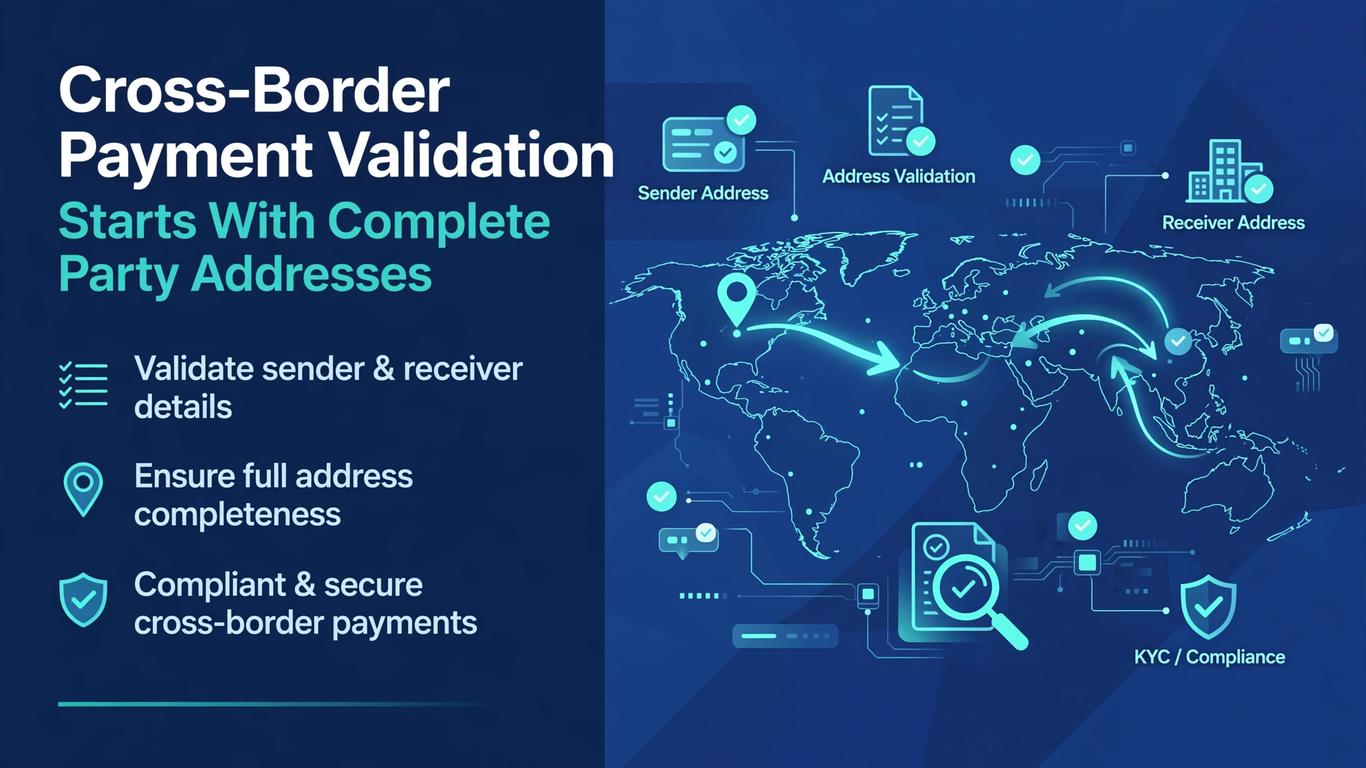
Cross-Border Payment Validation Starts With Complete Party Addresses

Introduction

A payment team prepares a cross-border settlement for a French supplier, but payment generation stops because the payee bank branch record has a country and no city. Tech Leads IT uses this moment in Oracle Fusion Financials Training to show why copying the supplier’s city is a shortcut, not a fix.

In an Oracle Fusion Financials Online Training session, learners identify every party whose address feeds the instruction, repair gaps at the governing record, and rerun validation. A good Oracle Fusion Financials Course also teaches them to keep evidence that the released payment carries accurate details, not values typed in. 

Oracle Fusion Financials Training Starts With Mapping the Payment Chain

Start with the whole route, not just the supplier. Depending on the setup, a payment can involve a payer, a payee, an ultimate payer, an ultimate payee, an intermediary bank, a payer bank branch and a payee bank branch. Some payments touch only a few of these. Others pick up extra parties through treasury structure or correspondent banking. Build a route record from the payment setup and the instruction data, then note which record is the authority for each address. A supplier site may own the payee address, while a separate bank or branch record owns the financial institution details. Two records can share a street or a city and still not be interchangeable.

For the French supplier, trace the path from the paying legal entity and disbursement account through to the supplier and its bank branch. Mark which parties are domestic and which sit across the border, and list which address components are filled in today. Done early, this exercise shows the blank branch city well before anyone builds a live payment request.

A quick rule of thumb helps here: if you can’t name the person or team who can correct a given address field, the route record isn’t finished. Every populated field should map to an owner, and every blank one should map to a next step.

Keep it a data-readiness check, though. Collect only the fields the payment process needs, and protect any export under your normal policy, so you don’t end up with a loose spreadsheet full of sensitive payment-party details.

What the Validation Actually Checks

Cross-border payment formats lean more and more on structured postal information. For the parties that apply, the town or city and the country code need attention, and the payee bank branch city is required on cross-border payments. Having a value is only the first test. The country code should follow the expected standard, the city should belong to the right party, and the record should reflect verified business information.

Country codes deserve special attention. A free-text country name that looks right to a human can still fail a rule that expects a standard code, so check the stored value, not just the displayed label.

It also helps to be clear about what the check does not do. It does not promise that an address is deliverable, current or free of other defects. It tests defined conditions during payment generation, and people still need to judge whether the data is genuine and fits the context.

Oracle’s guidance on postal address validation for cross-border payments says the checks run automatically when payments are generated, and a failing payment cannot move forward until the missing information is supplied. That is useful, because incomplete instructions are stopped before they reach the bank. The flip side is that a late discovery can put a cutoff at risk. Run a readiness report ahead of payment day for active foreign suppliers, bank branches and other applicable parties, and sort the findings by data owner. Payables or treasury staff may see an error without having the authority, or the evidence, to correct the master record underneath it.

Repair the Authoritative Record Instead of the Symptom

When the branch city is blank, pause the payment and confirm the branch identity from approved documentation or a controlled verification channel. Then update the bank branch record through your governed maintenance process, with maker-checker review where it is required. Don’t borrow the supplier’s city. Don’t guess a location from the bank’s name, and don’t paste in whatever a web search suggests. A bank can serve a supplier through a branch in another city or even another country.

The strongest fix ties the value to evidence, records who changed it and when, and keeps full bank instructions and confidential correspondence out of free-text comments. A reviewer reading the history later should be able to see where the city came from without taking anyone’s word for it.

The pressure is real, and it is fair to feel it. But a placeholder that passes today can turn into a returned payment, a bank query or a compliance question next week. Going to the data owner early is almost always faster than cleaning up afterwards.

Oracle Fusion Financials Online Training Should Cover Profiles, Formats, and Templates

Clean data is not enough if the payment configuration points to an older or customized route that doesn’t apply the intended artifacts. For integrated business-to-business bank partners, the delivered CBPR+ validation relies on new predefined payment process profiles. Setups that still use earlier profiles or customized templates need a review across payment process request templates, profiles, formats and templates. List every cross-border payment route and write down which combination it uses. Don’t swap out a customized profile blindly. Find out why it was customized, compare the output requirements, and test the equivalent change before promoting it. Configuration lineage deserves the same care as party-data lineage, since a perfect record sent down the wrong route can still fail.

Then build a test matrix around realistic routes: a standard foreign supplier payment, one with an intermediary bank, one with an ultimate payee, and a domestic payment that should not be misclassified. For each case, predict the applicable parties and required values, generate the payment, and check both the validation behavior and the structured output through approved tools. A case passes only when valid records go through and invalid ones stop for the expected reason. If everything passes, remove one required city and one country code on purpose. Negative tests show the validation is really active, rather than proving only that clean sample data can flow.

Treat the Review Stop as a Work Queue

When Stop Payments for Review is selected, address failures show up on the Resolve Payment Validation Errors page along with their errors. Treat that page as an exception queue and not a place to improvise data. Give each item an owner, record the failed party and attribute, and link the repair to its approved master-data request. The payment should stay put until the source is corrected and validation has run again.

A good reviewer also tells apart several payments blocked by one shared bank branch and several unrelated defects. Fixing the common record may clear the whole group, but every payment still needs its own successful validation result. Counting on one fix to cover everything is how a stray exception slips through.

Keep the notes short and factual. Write down the party, the attribute, the owner and the request reference, and leave out account numbers and long explanations. Someone picking up the queue the next morning should understand each line at a glance.

Retry Carefully and Reconcile Before Cutoff

Plan retries around the payment process request. Before rerunning, check whether the failed attempt created any instruction, output or bank transmission. Use payment identifiers and process status, and don’t assume an error message means nothing happened. Rerun only the intended population, and reconcile counts and values before release. In the scenario, the repaired branch record should let the held French supplier payment advance exactly once, while an intentionally incomplete intermediary-bank case stays stopped. That proves the remediation is selective, and a broad retry will not release other exceptions or duplicate payments that already succeeded.

Keep proportionate evidence of the configuration testing, the data correction approval, the failed validation, the successful rerun, the release and the bank acknowledgment. Limit access to it and avoid copying full account details into logs. At closeout, reconcile the approved payment population against generated instructions and transmitted totals.

An address correction changes master data, while a release moves cash. Those two events should carry separate authorization, even if the same team coordinates both. A clean trail shows who established the correct city, who approved the payment, which validation result cleared it and which instruction finally reached the bank.

Finally, hold a short review after each cutoff cycle. Which errors repeated, which owners were slow to respond, and which records keep coming back? Those answers show where to improve the master data before the next run.

Conclusion: What an Oracle Fusion Financials Course Should Leave You With

Reliable cross-border processing begins with an address chain that reflects the real parties and institutions. Map the route, verify city and country data at the right source, line up payment profiles and formats, and treat validation failures as controlled work, not obstacles to get around. Rerun only after confirming both the repair and the earlier process state, then reconcile the released instruction to the bank acknowledgment.

A good Oracle Fusion Financials Course exercise makes one missing branch city visible under cutoff pressure, because the safe answer is never a plausible placeholder. It is verified data, accountable remediation and one demonstrably valid payment. If a team keeps one habit from the exercise, let it be this: when validation fails, ask who owns the truth, not who can make the message disappear. 

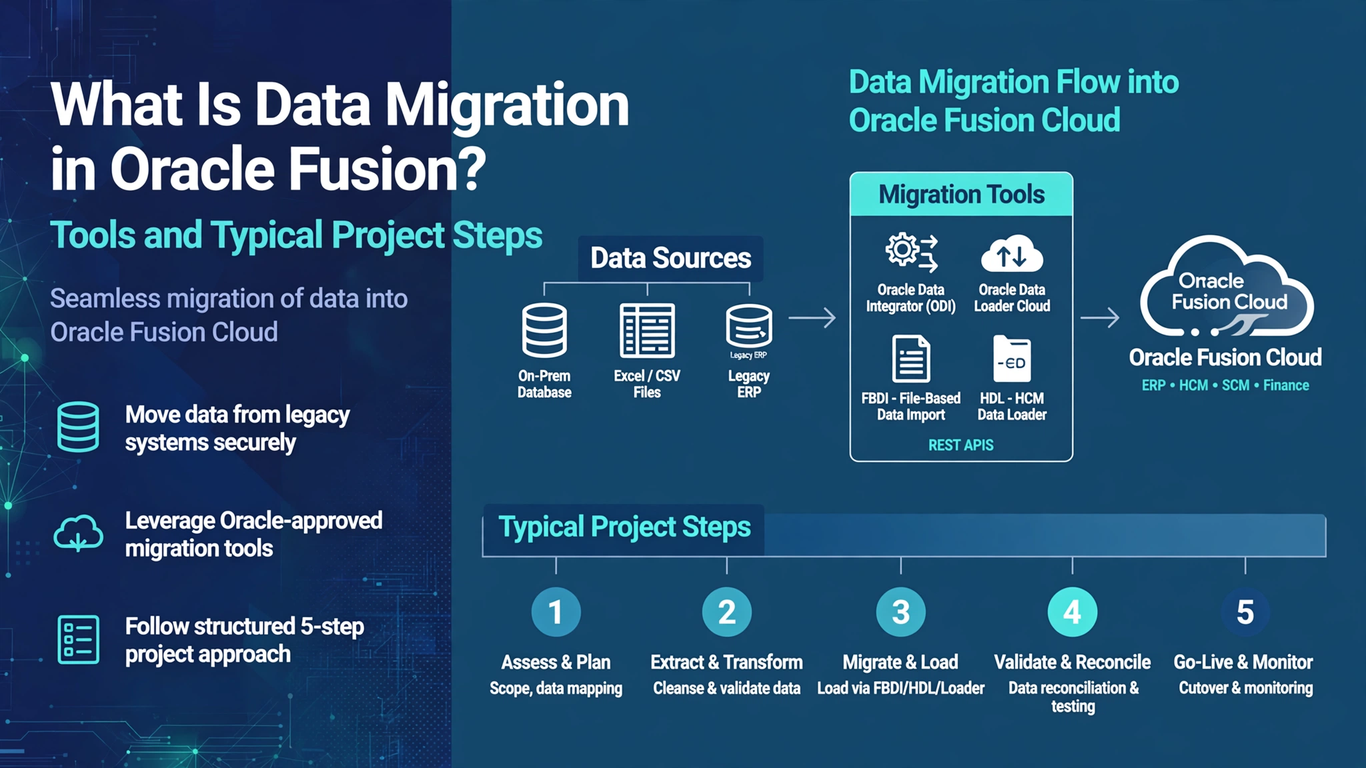
What Is Data Migration in Oracle Fusion? Tools and Typical Project Steps

Introduction

Every Oracle Fusion go-live depends on one thing people tend to underestimate: getting the old data into the new system correctly. At Soft Online Training, we see learners in our Oracle Fusion Technical Training in Bangalore sessions realize quickly that data migration is where many implementations succeed or stall. Moving suppliers, customers, employees, open invoices and balances sounds simple, until a single bad record blocks a whole load.

This blog explains what data migration means in Oracle Fusion, which tools are used, and how a typical project runs from start to finish. If you are considering Oracle Fusion Technical Training in Bangalore, it will also give you a clear picture of what to expect on a real migration project. 

What Data Migration Means in Oracle Fusion

Data migration is the process of extracting data from a legacy system, cleaning and reshaping it, and loading it into Oracle Fusion Cloud Applications. The legacy source could be an older ERP, Oracle E-Business Suite, PeopleSoft, a homegrown database, or even a set of spreadsheets.

Because Fusion is a SaaS application, you cannot write directly into its database tables. Everything goes through Oracle-supported import paths. That protects data integrity, but it also means you need to know the correct templates, validations and sequences. This is exactly why employers look for people who have done Oracle Fusion Technical Training in Bangalore or a similar hands-on program: the work is practical, and mistakes are expensive.

Typical data that gets migrated includes:

  • Master data such as suppliers, customers, items, banks and chart of accounts values
  • Open transactions such as unpaid payables invoices, open receivables and purchase orders
  • Opening balances and fixed assets
  • Worker records, assignments, salaries and absence data in HCM

Key Tools Used for Data Migration in Oracle Fusion

There is no single button called ”migrate.” Oracle provides several tools, and a good consultant knows which one fits which job.

File-Based Data Import (FBDI). This is the workhorse for Financials and Supply Chain. You download an Excel template for a business object, fill in the data, generate a zip file of CSVs, upload it to Universal Content Management, and run the import process. Errors come back in reports you can fix and reload.

HCM Data Loader (HDL). This is the main bulk tool for HCM. It reads pipe-delimited .dat files and handles complex objects like workers, with their many child records, in one go. It is powerful for both initial loads and ongoing updates.

Spreadsheet loaders (ADFdi). Desktop-integrated Excel workbooks let users upload smaller volumes directly from a spreadsheet. They work well for things like journals or small corrections, but not for large conversions.

REST and SOAP web services. For smaller or incremental loads, or when another system is feeding data continuously, APIs are a clean option. They suit integrations more than one-time bulk conversion.

Oracle Data Integrator and other ETL tools. Many projects use an ETL layer to extract and transform legacy data before producing the FBDI or HDL files. The transformation logic usually lives here.

Oracle Fusion Data Migration tools for specific products. Some modules, such as Oracle Fusion Cloud Project Management and Supply Chain, offer their own object-specific import programs, which are generally accessed through the Scheduled Processes area.

Typical Steps in an Oracle Fusion Data Migration Project

Projects vary, but most follow a similar rhythm. Understanding it is a big part of any serious Oracle Fusion Technical Training in Bangalore curriculum, because you will be asked to take part in these steps from day one.

Step 1: Scope and Planning

The team decides which objects to migrate, how much history to bring, and who owns each dataset. A common rule is to migrate only what the business truly needs. Five years of closed invoices rarely belong in Fusion; open items and balances usually do.

Step 2: Mapping and Gap Analysis

Analysts map legacy fields to Fusion fields. This is where surprises appear. A legacy system may allow blank values that Fusion requires, or store addresses in one field where Fusion expects several. The output is a mapping document that becomes the reference for everything that follows.

Step 3: Extraction and Cleansing

Data is pulled from the legacy source and cleaned: duplicates removed, inactive records filtered, formats standardized. Poor source data is the single biggest cause of load failures, so this step deserves more time than most plans give it.

Step 4: Transformation and Template Preparation

Cleaned data is converted into the format Fusion expects, either an FBDI template, an HDL file, or an API payload. Lookup values, such as business units, ledgers, currencies and legal employers, must match the configuration already set up in the target environment.

Step 5: Load and Validation

The files are uploaded and the import runs. Some records will fail, which is normal. The team reviews the error reports, corrects the source data, and reloads. Business users then verify the results: do totals match, do key records appear correctly, does a sample invoice or employee look right?

Step 6: Mock Conversions

Good projects run at least two or three mock loads in a test environment before go-live. Each cycle improves load sequence, timing and data quality. It also tells you how long the real cutover will take, which matters when the business can only tolerate a weekend of downtime.

Step 7: Cutover and Go-Live

During cutover, the legacy system is frozen, final data is extracted, loaded in the proven sequence, and reconciled against agreed control totals. Once the business signs off, users start working in Fusion.

Step 8: Post-Go-Live Support

Small issues usually surface in the first weeks, such as a missed supplier site or an incorrect opening balance. A support window with a clear fix process keeps these from becoming larger problems.

Common Challenges and How to Avoid Them

Most migration problems repeat from project to project:

  • Load sequence errors. Suppliers must exist before their sites, and sites before invoices. Dependencies need to be mapped early.
  • Configuration mismatches. If a value in your file does not exist in the setup, the record fails. Always load after configuration is stable.
  • Weak reconciliation. Without agreed control totals, nobody can prove the migration worked.
  • Late business involvement. Users should validate data in the early mock loads, not only before go-live. 

Conclusion 

Data migration in Oracle Fusion is not just a technical upload. It is a structured project: plan the scope, map the fields, cleanse the source, load through the right tool, validate with the business, and rehearse before cutover. FBDI, HDL, spreadsheet loaders and APIs each have their place, and choosing well saves a lot of rework.

If you are planning a career in Oracle Fusion technical consulting, Soft Online Training can help you get there. Our Oracle Fusion Technical Training in Bangalore walks you through these tools and project steps in guided, practical sessions, so you walk into your first migration project knowing what to expect. 

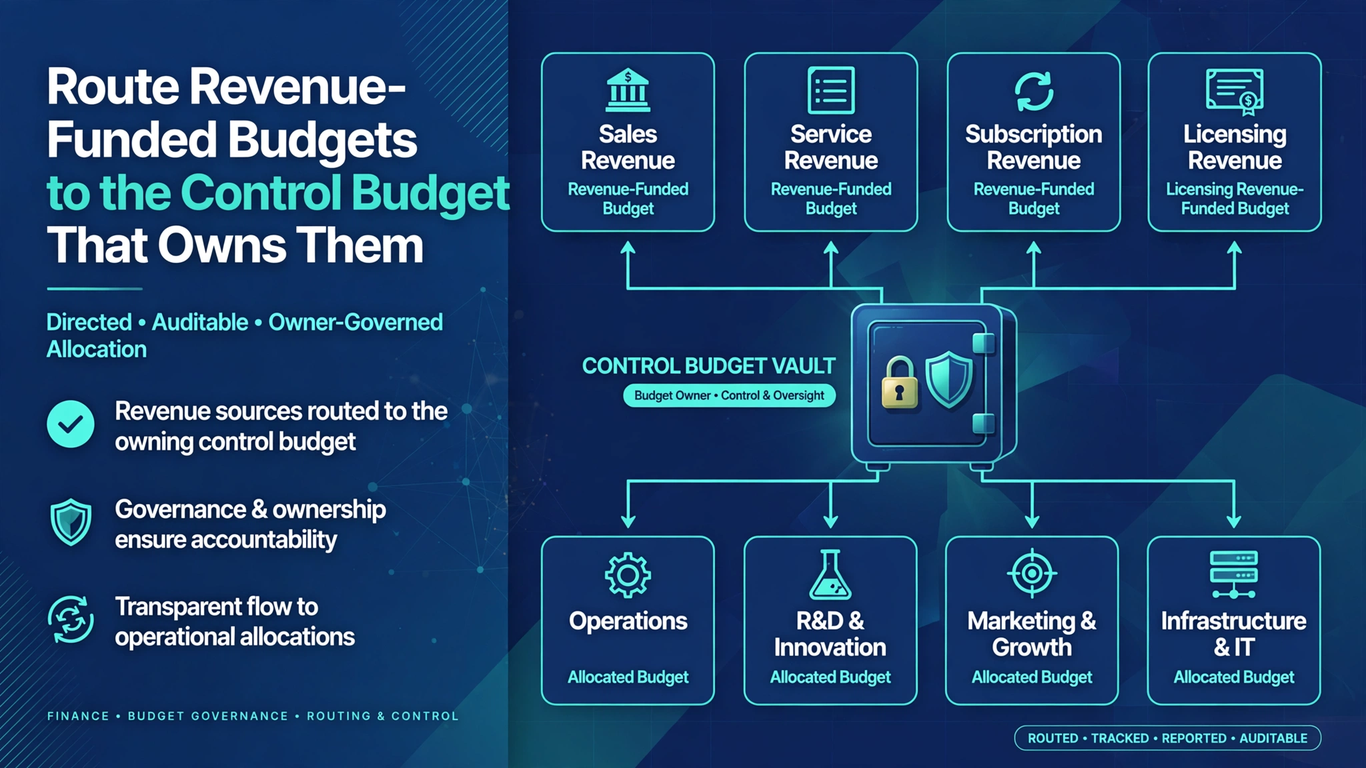
Route Revenue-Funded Budgets to the Control Budget That Owns Them

Introduction

A public library system uses grant revenue to fund outreach expenses and keeps two control budgets for different grant years. Soft Online Training uses this scenario because the planning scenarios have nearly identical names. When a scheduled process turns new revenue into an expense budget without a chosen control budget, nobody can say which scenario received the money.

That is why Oracle Fusion Financials Training in Bangalore stresses explicit routing: pick the control budget on purpose, confirm the funding rule, compare the entry with the source revenue, and reconcile in Budgetary Control and General Ledger before treating funds as available. 

What Oracle Fusion Financials Training in Bangalore Should Teach About Funding Rules

Before touching the process screen, document the policy that turns revenue into spending authority: source, eligible purpose, percentage or amount rule, accounts, budget period, control budget, and approver. In the library, current-year grant receipts fund outreach supplies while prior-year receipts stay limited to closeout costs. Similar labels don’t make money interchangeable. The process runs an approved rule, never a convenient one.

Build a control total: eligible revenue, exclusions, adjustments, calculations, and expected entry, reconciled to revenue. Watch for reversals, duplicates, late postings, and out-of-period items. The control budget parameter narrows the destination but can’t validate the source, so review both. 

Pick the Control Budget on Purpose

The Create Budget Entry from Revenue process has a Control Budget parameter. Its job is to line up revenue-derived expense budget amounts with the selected control budget and its corresponding scenario when the data is imported into both Budgetary Control and General Ledger. When several control budgets exist, treat that parameter as a routing decision. Confirm the budget name, the ledger and calendar, the period status, the scenario relationship, and the funding rule. Don’t pick a familiar prefix. A current-year and a prior-year budget can differ by a few characters while governing completely different funding authority.

Oracle’s documentation for Budget Entry Creation from Revenue says the parameter isn’t required. Optional doesn’t mean unimportant. Find out what a blank value actually does in your configuration, and whether that behavior is predictable enough for unattended runs. With multiple control budgets, an explicit selection removes ambiguity and keeps entries limited to the intended budget and scenario. If you have a real reason to leave it blank, document it and test the scope it produces. Inherited defaults and operator memory shouldn’t decide where spending authority gets created.

Audit Every Scheduled Run Before It Surprises You

Because this change needs no separate enablement step, existing schedules and scripts deserve attention right away. Take inventory of recurring job definitions, job sets, outside orchestration tools, run books, and personal favorites that call the process. Record the current parameters and the business owner for each one.

A schedule built when only one control budget existed can turn unsafe the day a second one appears. Where policy requires it, update the automation to pass the intended value explicitly, get change approval, and test in a representative environment. The fact that no new access is needed doesn’t mean anyone should be free to edit schedules or submit budget activity.

Predict the Entry Before You Run It

Prepare an expected-results table with the control budget, scenario, period, budget account, source revenue amount, funding-rule calculation, expected expense budget amount, and rounding treatment. Add the existing budget balance too, so the reviewer can tell a new entry from the cumulative balance after import. If the approved rule makes eighty percent of a grant receipt available, the expected entry is the calculated increment, not the total authority once the import finishes. A shared table like this gives operators and approvers one reference and makes it harder to wave through an entry just because the number looks reasonable.

Then test the edges. Use revenue posted at a period boundary, an account the funding rule excludes, a reversal, and a small amount that exercises rounding. A destination can be right at the control-budget level and wrong at the account or period level. If the output shows warnings or rejected lines, reconcile accepted, rejected, and unprocessed amounts back to the source total. Don’t add a rejected amount by hand until you understand why the rule or mapping excluded it.

Reconcile Both Destinations, a Habit Oracle Fusion Financials Training in Bangalore Can Build

After processing, check the entry and its status in Budgetary Control: control budget, scenario, period, account, amount, and source request. Then verify General Ledger. A completed status only means the program ended, not that every line landed, so compare counts and totals, chase exceptions, and keep request logs.

Check the other budget too. In the library example, current-year grant revenue should raise only current-year authority and leave the prior year untouched. Review beginning balance, derived entry, other approved activity, and ending balance for each budget. Finally, decide how duplicates are prevented, and after a timeout, inspect current state before rerunning. 

Make Exceptions Visible to Budget Owners

Assign an owner for each kind of problem: mismatched scenarios, rejected accounts, closed periods, unexpected zero entries, and differences between Budgetary Control and General Ledger. Set resolution dates based on when spending decisions depend on that authority. Don’t cover a routing error with a second manual budget entry unless policy allows a documented correction and the original error is reversed or otherwise resolved.

Give budget managers the source-to-entry reconciliation, not just the process log. They need to know which revenue created authority, under which rule, in which budget, and whether that authority is really available to spend.

Conclusion

Spending authority built from revenue deserves a destination as carefully controlled as the calculation behind it. Define the funding rule, reconcile the eligible revenue, choose the intended control budget, and verify the matching scenario before you submit anything. Then review any schedules and scripts that might skip the new parameter.

Oracle Fusion Financials Training in Bangalore should also push learners to predict each entry at account and period level, then reconcile in both budget systems while proving neighboring budgets stay untouched. A good exercise uses two plausible grant-year destinations and a retry, so learners show explicit routing and duplicate awareness. 

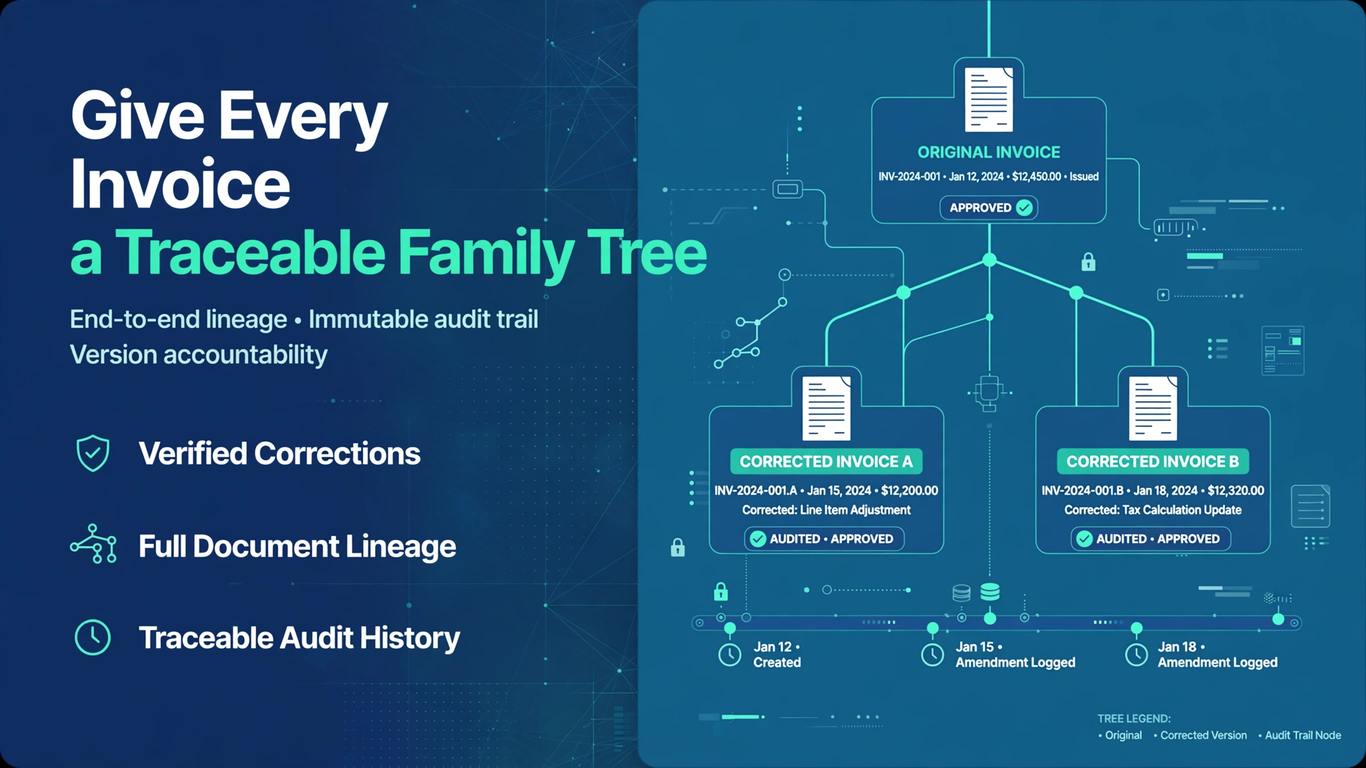
Give Every Corrected Invoice a Traceable Family Tree

Introduction

A billing specialist discovers that a completed forty-eight-thousand-dollar invoice carried the wrong tax classification. At Tech Leads IT, we use this scenario in Oracle Cloud Financials Online Training because the customer already has the invoice, so quietly editing a draft is no longer possible. The team issues a credit memo and prepares a corrected invoice, but the paperwork becomes hard to explain unless the replacement points back to the original.

That reference is part of the correction. Oracle Cloud Financials Training Online teaches learners to choose the right source, record the reason, and leave a trail any reviewer can follow. 

Write Down the Correction Before You Create Anything

Start with a short correction record. It should say what is wrong, what is still valid, who approved the fix, and which transaction is affected. In this case the quantity, price, customer, and contract basis all stay the same. Only the tax treatment and the resulting total need to change. Saying that out loud keeps the rebill from turning into a chance to slip in unrelated commercial edits.

Capture the original transaction number, business unit, bill-to account, currency, completion status, disputed amount, and the expected credit and replacement totals. A preparer should be able to explain the planned document chain before typing a single field, and an approver should be able to hold it up next to the customer communication and see that the two agree.

Pick the Source by Identity, Not by Resemblance

When you prepare the replacement invoice, you select the original in the Rebill Source Transaction field. Search results can be messy. You may see similar invoice numbers, repeated customer references, or several transactions with the same amount. Before you choose one, check the business unit, customer account, transaction date, currency, and amount.

The field is meant to reference a transaction in the invoice class, and the referenced invoice has to exist and be complete. Those are helpful guardrails, but they don’t remove the operator’s responsibility. An invoice being eligible only means it can be referenced. It doesn’t prove it’s the one you meant.

Why Oracle Cloud Financials Online Training Should Include Near-Match Tests

The best way to see whether a team really picks sources by identity is to make it hard. In a practice environment, create two completed invoices for the same customer with adjacent dates and identical totals. Correct only one of them. Ask the tester to find the source through the normal search path, then write down which attributes they used to tell the two apart. Finish the rebill and inspect the relationship it created.

This exercise shows quickly whether a procedure leans too heavily on a displayed number or amount. It also surfaces data-entry habits that work fine on a small test set and turn risky in a busy receivables department, where duplicate purchase-order references and recurring monthly values are everyday occurrences. Good Oracle Cloud Financials Online Training builds in these tempting near matches on purpose, because learners who only ever see clean data never practice the judgment the job actually demands.

Carry the Reference Through Every Entry Channel

The source reference can arrive through the transaction page, AutoInvoice, or REST services. The technical shape differs in each case. A page user picks from a list of values, an import maps source details onto the interface line, and an integration places them in a payload. The business control, though, has to be the same everywhere.

Oracle’s documentation on original invoice and credit memo references for rebill invoices notes that the application checks whether the referenced invoice is eligible for rebilling. Don’t wait for that check to catch everything. Build upstream validation that flags missing or contradictory source details early, and send failures to a correction queue with the proposed rebill held in draft. Stripping out the relationship just to keep processing moving is the wrong trade.

Also don’t assume every service handles the reference just because one does. The rebill source reference is not supported through Receivables SOAP services. If you have integrations that create replacement invoices, list them and note which route each one uses.

For the AutoInvoice and REST paths, keep a stable correlation between the approved correction record, the inbound data, the processing result, and the transaction that gets created. Then test four cases: a valid source, an incomplete source invoice, a nonexistent identifier, and a source from the wrong business context. The goal isn’t only to see acceptance or rejection. You want proof that accepted records link correctly and that rejected records stay visible, owned, and safe to resubmit once they’re fixed.

Treat Completion as a Lineage Lock

While the rebill is still incomplete, review every corrected field and the source relationship together. Once the rebill is completed, the Rebill Source Transaction field becomes read-only. That makes the pre-completion review matter a great deal, because after that point the source is no longer a note you can tweak.

A simple checklist helps. Compare the replacement against both the approved correction and the original invoice. Confirm that the values you meant to keep still match, that the values you meant to change reflect the approval, that tax and accounting look right, and that the selected source is the correct one. A reviewer should be willing to reject a perfectly calculated replacement if its lineage points at the wrong original.

Completion also changes how the relationship gets investigated. After the rebill is complete, you can drill down from it to the original invoice. From the source transaction, you can review the related credit memo information in Transaction Activities. Test both directions as part of closeout: open the completed replacement and reach the source, then open the source and find the related credit activity. The point isn’t to prove that links exist somewhere in the data model. It’s to show that a collector, billing analyst, or auditor following the normal inquiry route can rebuild the story of why the customer saw an original charge, a reversal, and a corrected charge.

Reconcile the Whole Document Family

Reconcile the original, the credit memo, and the rebill at both line and total level. Compare original lines with credited lines and replacement lines, and be ready to explain every difference. Check tax, freight, distributions, transaction dates, accounting status, the customer balance, and any receipt treatment.

A full credit followed by a corrected rebill can produce a tidy net result, and that tidiness can hide problems. An omitted line or an accidental new charge may be sitting inside a total that looks right. Keep the approval, the original invoice, the credit memo, the rebill, the completion evidence, and the customer notice under your organization’s normal records policy. The lineage field cuts down on manual searching, but it doesn’t replace proof that the amounts and accounting are sound.

What Oracle Cloud Financials Training Online Should Test Before Release

A focused test pack beats a sprawling one. Include a correct manual rebill, a correct imported rebill, a reference to an incomplete invoice, a reference to the wrong but eligible invoice, a completed rebill whose source can no longer be edited, and a correction where the original already has receipt activity. Check the document relationship itself, not just whether processing finished.

Test recovery too. When an import fails, can the team fix the source data without creating a duplicate replacement? When a preparer picks the wrong source before completion, can the draft be corrected and independently reviewed? Clear answers to questions like these are worth more than a long script that marks every technically completed transaction as a pass. That’s the standard to aim for in any Oracle Cloud Financials Training Online program: learners should leave knowing how to prove a result, not only how to produce one.

Conclusion

A corrected invoice is easiest to defend when its family tree is built at creation, not pieced together months later. Approve the correction, verify the original invoice using several attributes, and populate the source through a supported channel. Then reviewing the relationship before completion makes it read-only, because that is the last moment to fix it.

Good Oracle Cloud Financials Online Training goes further. Learners follow the drill-down, reconcile the original, the credit memo, and the replacement, and explain the customer balance. Oracle Cloud Financials Training Online should also include near matches and failed references, so learners keep an accurate, navigable chain from the first charge to the corrected obligation. 

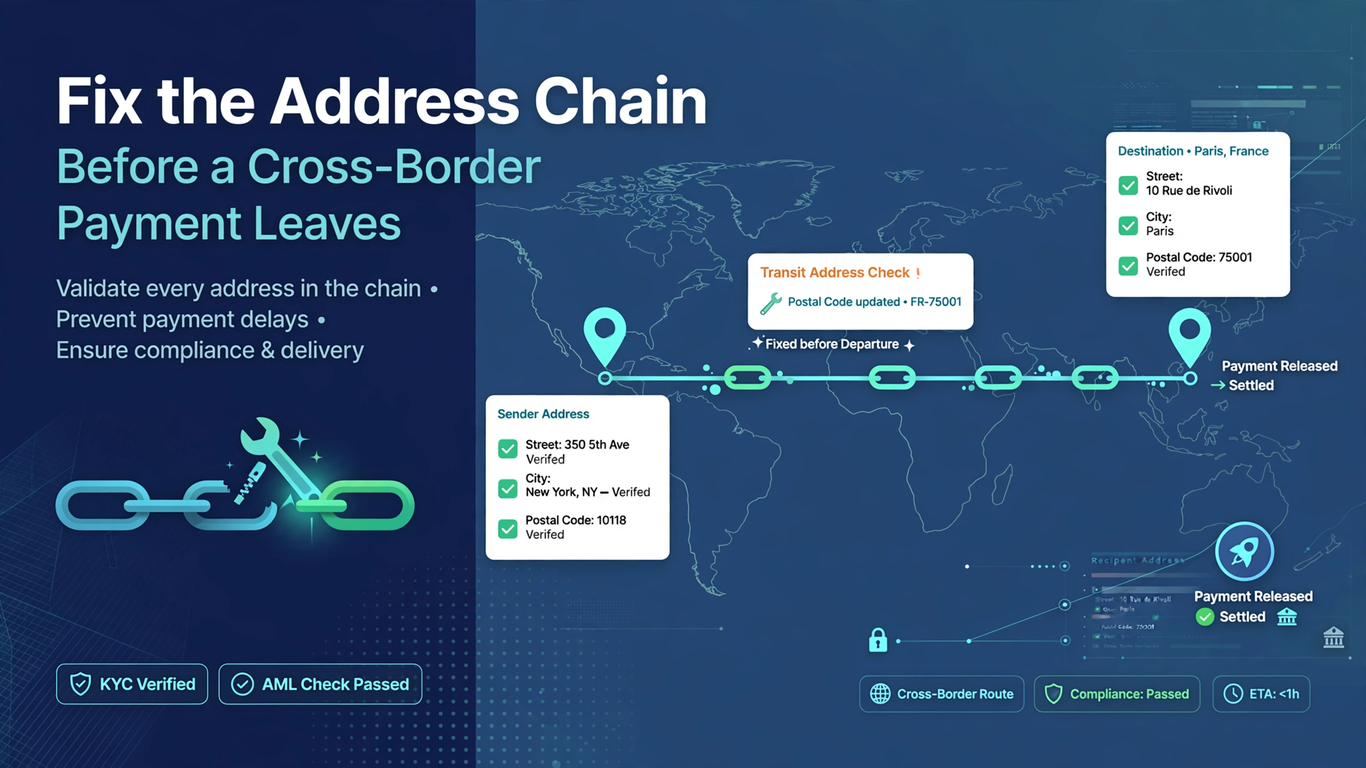
Fix the Address Chain Before a Cross-Border Payment Leaves

Introduction

A payment team is preparing a cross-border settlement for a French supplier when generation suddenly stops. Tech Leads IT uses this situation in Oracle Fusion Financials Training to show why a blank bank branch city cannot be fixed by borrowing the supplier’s city. The screen may turn green, but the data would still be untrue.

Oracle Fusion Financials Online Training teaches learners to map every party, repair gaps at the owning record, and rerun validation. A good Oracle Fusion Financials Course also keeps evidence, so the released payment carries accurate address details, not values chosen only to pass a rule. 

Oracle Fusion Financials Training Begins With Mapping the Payment Chain

Start with the whole route, not just the supplier. Depending on the payment, the parties can include the payer, payee, ultimate payer, ultimate payee, an intermediary bank, the payer bank branch, and the payee bank branch. Some payments use only part of that chain. Others pick up extra parties through treasury structure or correspondent banking. Build a route record from the payment setup and instruction data, then name the authoritative source for each address. A supplier site may govern the payee address, while a separate bank or branch record governs the financial institution details. Similar street or city values do not make those records interchangeable.

A simple route record might list each party, its role, its country, the record that owns its address, and the person responsible for that record. Even a one-page table like this changes the conversation, because a missing city stops being a vague payment problem and becomes a specific question for a named owner.

For the French supplier, trace the path from the paying legal entity and disbursement account through to the supplier and its bank branch. Note which parties are domestic, which sit across the border, and which address components are filled in today. Done early, this exercise exposes the blank branch city before a live payment request exists. Keep it a data-readiness review, not a collection drive. Limit the inventory to fields the payment process needs, and protect exports under your policy, so you find ownership and gaps without creating an uncontrolled spreadsheet of sensitive payment-party data.

Understand What the Validation Actually Requires

Cross-border payment formats lean more and more on structured postal information. For the applicable parties, town or city name and country code need attention, and the payee bank branch city is required on cross-border payments. Presence is only the first test. Country codes must follow the expected standard, city values must belong to the right party, and the records should reflect verified business information. The validation is not a promise that an address is deliverable, current, or free of other defects. It checks defined conditions during payment generation, and people still have to judge authenticity and context.

Think of it as a gate rather than a guarantee. The gate is useful precisely because it is narrow, and the team’s job is to cover everything it does not check.

Oracle’s Postal Address Validation for Cross-Border Payments documentation explains that these checks run automatically during payment generation, and a failing payment cannot proceed until the missing information is supplied. That boundary is helpful because it stops incomplete instructions before transmission. It also means a late discovery can threaten a cutoff. Set up a readiness report or controlled review ahead of payment day for active foreign suppliers, bank branches, and other applicable parties. Group findings by data owner, not just by payment processor, because a treasury or payables user may see an error without having the authority or evidence to fix the master record behind it.

Oracle Fusion Financials Online Training Should Teach Repairs at the Source

When the branch city is blank, pause the payment and confirm the branch identity through approved documentation or a controlled verification channel. Then update the bank branch record through the governed maintenance process, with maker-checker review where it is required. Do not borrow the supplier’s city, guess a location from the bank name, or paste in a city from an internet search. A bank can serve a supplier through a branch in another city or even another country.

The strongest repair ties the value to evidence, records who changed it and when, and keeps full bank instructions and confidential correspondence out of free-text comments. A reviewer reading the history later should see a verified fact with an owner, not a convenient guess made at four in the afternoon.

Timing matters here too. If branch confirmation takes a day, the honest options are to ask for a cutoff extension or move the payment to the next cycle. Both beat sending an instruction with a made-up city. A late payment has a cost, but a misrepresented bank branch can cost more, and it is much harder to explain afterward.

Align Profiles, Formats, and Templates

Clean data is not enough if the payment configuration follows an older or customized route that never applies the intended artifacts. For integrated business-to-business bank partners, the delivered CBPR+ validation depends on new predefined payment process profiles. Configurations built on earlier profiles or customized templates need review across payment process request templates, profiles, formats, and templates. Inventory each cross-border payment route and document which combination it invokes.

Resist the urge to replace a customized profile blindly. Find out why it was customized, compare the output requirements, and test equivalent changes before promotion. Configuration lineage matters as much as party-data lineage, because a perfect branch record does nothing if the route never reads it the way you expect. A comparison sheet listing the profile, format, and template for each route, along with its owner and last change date, makes later reviews far easier. When a bank asks why a file looked different this month, the team that can name the profile, format, and template involved will answer in minutes instead of days.

Build a Test Matrix Around Realistic Routes

Design the matrix around routes you really run. Include a standard foreign supplier payment, one with an intermediary bank, one with an ultimate payee, and one domestic payment that should not be misclassified. For each case, predict the applicable parties and required values, generate the payment, and inspect both the validation behavior and the resulting structured output through approved tools. A test passes only when valid records proceed and invalid records stop for the expected reason.

Record the expected result before running each case. Writing the prediction first keeps testers from reading the outcome and then deciding it looked right.

If every case passes, go one step further and deliberately remove one required city and one country code. Negative tests prove the validation is active, not merely that clean sample data can flow. They also show the team what a failure looks like before a real cutoff makes it stressful.

Use the Review Stop as a Controlled Queue

When Stop Payments for Review is selected, address failures appear on the Resolve Payment Validation Errors page along with their errors. Treat that page as an exception queue, not a place to improvise data. Give each item an owner, record the failed party and attribute, and link the repair to its approved master-data request. Keep the payment from moving forward until the source is corrected and validation is rerun.

The reviewer should also tell apart several payments blocked by one shared bank branch from several unrelated defects. Fixing the common record may clear the whole group, but every payment still needs its own successful validation result. Age matters in this queue too. Items close to the cutoff should be visible to everyone, so nobody discovers a stuck payment at the last minute.

Retry Only After You Know the Prior State

Design retry controls around the payment process request. Before rerunning, establish whether the failed attempt created any instruction, output, or bank transmission. Use payment identifiers and process status instead of assuming an error message means nothing happened. Rerun only the intended population, and reconcile counts and values before release.

A short checklist before each rerun helps: confirm the repair is approved, confirm no instruction exists from the failed attempt, and confirm the selection covers only the intended payments.

In the scenario, the repaired branch record should let the held French supplier payment advance once, while an intentionally incomplete intermediary-bank case stays stopped. That proves remediation is selective, and that a broad retry neither releases other exceptions nor duplicates payments that already succeeded.

Monitor Readiness Before Cutoff

Keep proportionate evidence of configuration testing, data correction approval, the failed validation, the successful rerun, payment release, and bank acknowledgment. Restrict access, and avoid copying full account information into logs. At closeout, reconcile the approved payment population with generated instructions and transmitted totals.

An address correction changes payment master data, while release moves cash. Those events deserve distinct authorization even when the same operational team coordinates them. A clean audit trail shows who established the correct city, who approved the payment, which validation result cleared it, and which instruction finally reached the bank. It also gives auditors and bank contacts one coherent story instead of a pile of screenshots.

Conclusion: What an Oracle Fusion Financials Course Should Leave Behind

Reliable payment processing starts with an address chain that reflects the real parties and institutions. Oracle Fusion Financials Training should show learners how to map the route, verify city and country data at the right source, and align profiles and formats. Validation failures are controlled work, not obstacles to bypass.

Oracle Fusion Financials Online Training adds one rule: rerun after confirming the repair and the earlier process state, then reconcile the release to the bank acknowledgment. A good Oracle Fusion Financials Course makes one missing branch city visible, because the safe answer is verified data, accountable remediation, and one valid payment. 

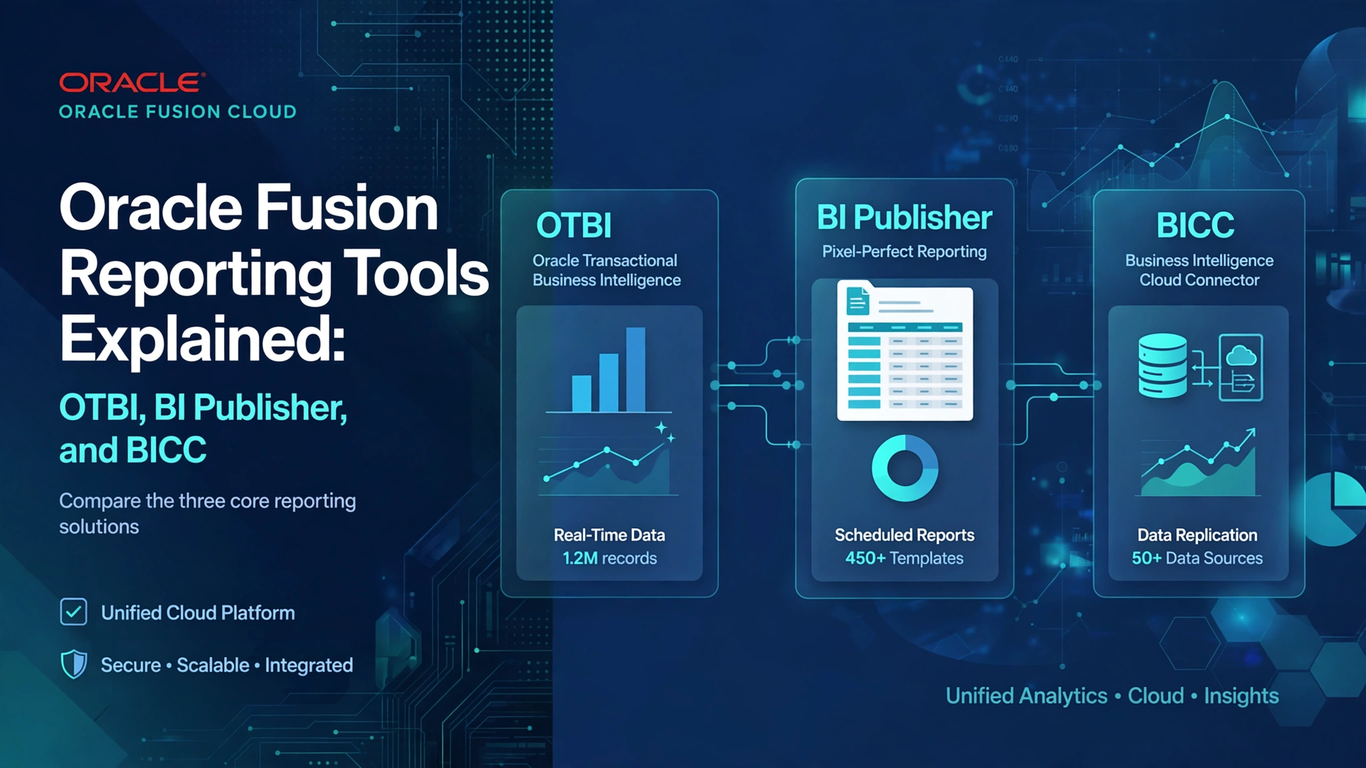
Oracle Fusion Reporting Tools Explained: OTBI, BI Publisher, and BICC

Introduction 

Ask ten Oracle Fusion consultants which reporting tool to use and you will probably get ten slightly different answers. At Soft Online Training, we see the same confusion with learners who can build a report but struggle to explain why they chose that tool. The reason is simple: Fusion offers three tools that look alike from a distance but solve very different problems.

This blog clears it up in plain language, so you know what OTBI, BI Publisher, and BICC actually do and when each one makes sense. Whether you are a beginner or already preparing through Oracle Fusion Technical Training in Hyderabad, understanding where each tool fits will make your project work and your interviews a lot easier.

Why Oracle Fusion Has More Than One Reporting Tool

A finance manager checking yesterday’s payables, an auditor who needs a formatted invoice PDF, and a data team feeding a warehouse all want ”a report.” But their needs are completely different. One wants a quick answer, one wants a polished document, and one wants millions of rows moved out of Fusion.

Oracle built three tools around those three needs. OTBI is for fast, interactive analysis. BI Publisher is for pixel-perfect, formatted output. BICC is for bulk data extraction. Once you hold on to that split, most of the confusion goes away.

OTBI: Quick Answers for Business Users

Oracle Transactional Business Intelligence, or OTBI, is the tool most people meet first. It sits inside Fusion applications and reads live transactional data, so what you see is current. There is no waiting for a nightly refresh.

You build reports by picking a subject area, such as Payables Invoices or Workforce Management, and dragging columns into an analysis. Add a filter, switch to a chart, pin it to a dashboard, and you are done. Business users can do all of this without writing a line of SQL.

OTBI works well for:

  • Day-to-day operational questions like open invoices by supplier
  • Dashboards that managers check every morning
  • Ad hoc analysis when someone asks ”can you pull this quickly?”

Its limits are just as important. You are restricted to the subject areas Oracle provides, so complex joins or unusual data sources can be difficult. OTBI is not built for pixel-perfect documents or for pulling huge volumes of data. Trying to force it into those jobs is a common beginner mistake.

BI Publisher: When the Layout Matters

BI Publisher, often called BIP, is where formatting takes over. When a report has to look exactly right, like a customer invoice, payslip, purchase order, or statutory filing, it is the usual choice.

A data model gathers the data, usually with SQL, while a separate layout template built in Word, Excel, or RTF controls how it looks. Change the output format, and the same data model can produce a PDF, an Excel file, an HTML page, or even a bank flat file.

That separation is its real strength: finance teams can adjust a logo or column order without touching the query. BIP also supports scheduling and bursting, so you can run a report overnight and email each supplier only their own statement. 

Learning These Tools Through Oracle Fusion Technical Training in Hyderabad

Reading about these tools only gets you so far. The real understanding comes when you build a data model, break it, fix it, and watch the output change. That is why hands-on practice matters so much in Oracle Fusion Technical Training in Hyderabad, where learners work with realistic scenarios rather than theory alone.

A good starting exercise is to build the same report twice. First create it in OTBI, then recreate it in BI Publisher with a formatted template. You will quickly feel the difference in effort, flexibility, and output control. That experience teaches more than any comparison table.

BICC: Moving Data Out in Bulk

The Business Intelligence Cloud Connector, or BICC, is the least visible of the three tools, yet it does the heaviest lifting. It is not a reporting tool like OTBI or BI Publisher, because it never displays anything. Its job is to pull large volumes of data out of Fusion and hand it to an external destination.

Picture a company running a data warehouse or a separate analytics platform. That team needs millions of rows copied out regularly, without slowing the live application. BICC does this through scheduled extract jobs built on View Objects, and the files land in Oracle Universal Content Management or Oracle Cloud Storage. After the first full load, incremental extracts pull only what changed, which keeps jobs fast and storage costs reasonable. 

Reach for BICC when the request mentions a data warehouse, full load, incremental refresh, or feeding another system. If someone just wants to look at a report, skip it. 

Choosing the Right Tool: A Practical Way to Decide

When a request lands on your desk, ask yourself three quick questions:

  1. Does someone need a quick, interactive answer from current data? Choose OTBI.
  2. Does the output need a precise layout, scheduling, or distribution? Choose BI Publisher.
  3. Does a downstream system need large volumes of Fusion data? Choose BICC.

Real projects often combine them. A company might use BICC to feed a warehouse, OTBI for operational dashboards, and BI Publisher for invoices and statutory reports, all at the same time. Knowing where each one fits is what separates a confident consultant from someone guessing.

Career Value of Mastering Oracle Fusion Technical Training in Hyderabad Skills

Reporting is one of the most consistently needed skills on Fusion projects. Every implementation, upgrade, and support engagement needs people who can deliver reports and data extracts. Employers look for candidates who understand not just how to build in each tool, but why one fits better than another.

If you are preparing for a technical role, focus on these basics: learn SQL well, understand Fusion subject areas and View Objects, practice building BI Publisher templates, and run a few BICC extracts end to end. Pair that with Oracle Fusion Technical Training in Hyderabad, and you will build the kind of practical confidence interviewers notice quickly.

Conclusion

OTBI, BI Publisher, and BICC are not competitors. Each one handles a different job: OTBI for fast analysis, BI Publisher for polished documents, and BICC for moving data in bulk. Once you see that split, choosing the right tool stops being a guessing game and becomes a simple decision. 

If you want to build these skills with real examples, Soft Online Training can help you get there. With practical Oracle Fusion Technical Training in Hyderabad, you can move beyond the concepts and start using OTBI, BI Publisher, and BICC with confidence on live projects. 

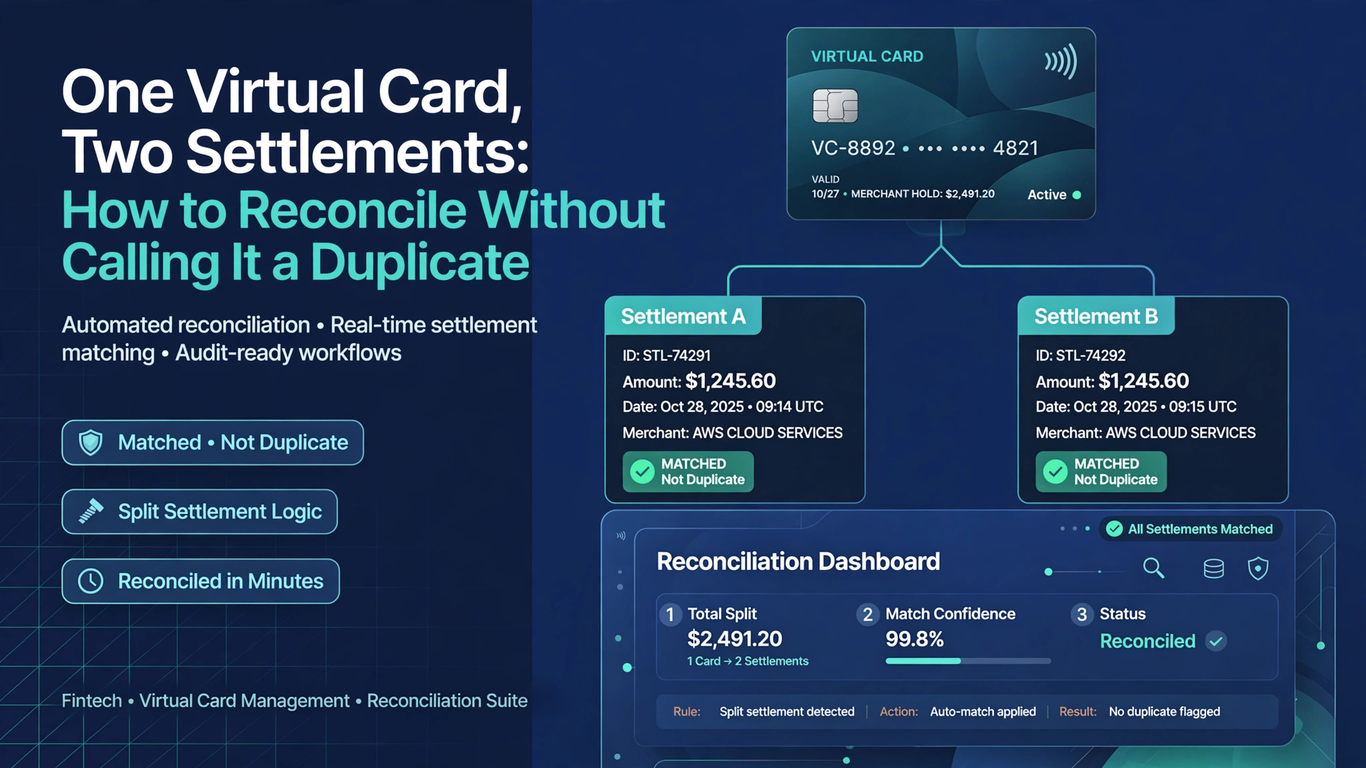
One Virtual Card, Two Settlements: How to Reconcile Without Calling It a Duplicate

Introduction

A supplier receives a virtual card for a $12,000 invoice and captures $7,000 at shipment, then $5,000 after final acceptance. At Soft Online Training, we use this case to show how one payment can legitimately settle across two billing cycles under the same reference. The first charge lands before one statement closes, and the second arrives in the next.

A careless review would flag the second line as a duplicate, but a careful one checks the evidence first. That is why this scenario matters in Oracle Fusion Financials Training in Hyderabad: it teaches you to protect the payment without blocking legitimate business. 

Start With the Payment, Not the Statement

Before opening any statement line, pin down the payment itself. Pull the approved invoice and its virtual card payment, noting supplier, payment reference, authorized amount, currency, issue date, and expected fulfillment.

Confirm the payment sits under your organization’s integrated virtual card arrangement. The multiple-settlement feature is built around the J.P. Morgan integration, so don’t assume other providers or manual card programs behave the same way.

That payment record is your control total, yet each settlement still deserves its own check.

Then ask whether split capture is expected, and keep the purchase order and acceptance evidence handy. A line can fit the pattern and still be wrong on amount, currency, merchant, or timing. 

Keep Every Statement Line as Its Own Record

When card statement lines arrive, the application matches each to the payment reference. Lines tied to the same virtual card payment are stored separately, not flagged as duplicates, for the payment manager to review.

Separate records preserve each settlement’s dates and amounts. Merge them and a real repeated charge could hide; reject repeated references and valid splits break.

Review at two levels: the group view shows whether the payment is fully represented, the line view whether each piece is genuine and recorded once, with a running total against the authorized amount.

In Oracle Fusion Financials Training in Hyderabad, this habit separates a reconciliation that looks right from one that survives audit. 

Telling a Split Settlement From a Duplicate

A shared reference proves nothing by itself. Compare the full line evidence with the payment’s settlement history.

Two lines of different amounts that add up to the authorized payment may well be expected. But the arithmetic isn’t proof. Check shipment or acceptance milestones, and talk to the supplier if you need to. Going the other way, two lines with the same amount and date could be valid partial captures, or one could be a replay. Write down why the lines represent separate economic events instead of leaning on how similar they look or on an automatic match.

The best way to practice this is a test pack with deliberate variants:

  • two valid partial settlements that total the payment
  • a replay of the first statement line
  • a third line that pushes the total above the payment amount
  • a settlement carrying an unrelated reference

Predict the grouping and status before you import anything. Then confirm that the valid lines stay separate, that the payment only becomes fully reconciled at the right total, and that suspicious or unmatched lines go down your exception route instead of being forced into the valid group.

Carry the Open Balance Across Billing Cycles

After the first $7,000 settlement, the payment is only partly represented on card statements. Record the $5,000 remainder and keep someone responsible for it into the next cycle. Don’t close the investigation just because the first line matched its reference, and never post a manual balancing entry to make the current statement look complete.

The expected second settlement needs an age, an owner, and an escalation point. If it never arrives, treasury or payables should follow up with the bank and supplier through controlled channels.

For this you need a stable carryforward report showing the original payment amount, cumulative settlements, remaining amount, earliest and latest settlement dates, and current review status, all without overwriting the underlying records. Tie the opening carryforward to the prior cycle’s unresolved items, add the current lines, and explain every closure. That way old partial payments don’t vanish the moment attention moves to a new statement. An expected split justifies monitoring, but it never justifies leaving an item with no owner.

Close Only at the Authorized Amount

Once the statement lines tied to the virtual card total the payment amount, the payment is marked fully reconciled for statement purposes. Don’t accept that status on faith. Verify the total yourself and confirm every line belongs to the right payment.

Here, $7,000 plus $5,000 reaches the $12,000 control total. But a combination that hits $12,000 by sneaking in one unrelated line would be arithmetically neat and substantively wrong. Status should follow a valid population, never prove that the population was valid.

At closeout, link the supplier invoice, the virtual card payment, every statement line, and the fulfillment evidence. Confirm each line appears once, the cumulative amount equals the payment, no unexplained remainder is left, and nothing was waved away as a presumed duplicate. Keep the reviewer’s name, review date, exception decisions, and any communications your policy requires, while limiting stored card information to what the secured process allows.

Let Exceptions Sharpen Your Monitoring

Track counts and values separately for single-settlement payments, partially settled multi-settlement payments, fully reconciled multi-settlement payments, over-settlement exceptions, unmatched lines, and aged carryforwards. Each calls for a different action, so don’t fold them into a single reconciliation percentage.

If a supplier regularly delays final capture, change the monitoring ownership or the commercial conversation instead of marking incomplete payments as complete. Trends can improve your control design, but they never decide whether one particular line is valid.

Final Thoughts 

Multiple settlements need one payment-level control total and several line-level reviews. Establish the authorized virtual card payment, keep each statement line separate, group them by reference, and use full evidence to tell valid partial captures from duplicates. Carry unresolved balances across billing cycles with a named owner, and close only when valid related lines equal the payment amount.

A well-built exercise in Oracle Fusion Financials Training in Hyderabad should show both sides of this control: a repeated reference can be a legitimate part of a settlement, but matching arithmetic never removes the need to check every line and keep its history. 

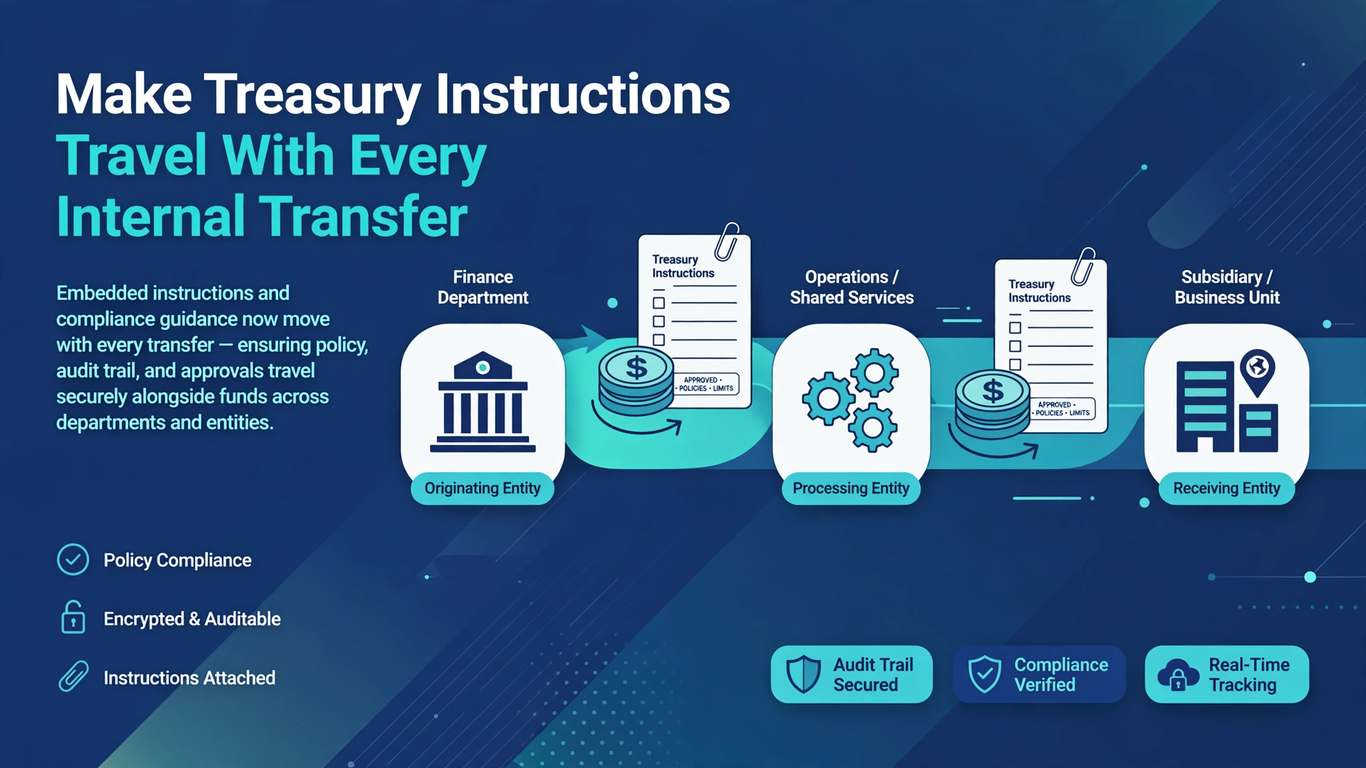
Make Treasury Instructions Travel With Every Internal Transfer

Introduction

Picture a treasury analyst in Toronto racing a same-day cutoff to move Canadian dollars from an operating account to a concentration account. Tech Leads IT uses this scenario in Oracle Cloud Financials Online Training to show that a transfer is more than money leaving one account and reaching another. The bank wants a service level and delivery channel, compliance wants a payment reason, and the cash manager wants the business purpose attached.

In Oracle Cloud Financials Training Online, learners ask whether the instruction carried enough structured detail, started in the right source-account currency, and left a trail a reviewer can follow. 

Separate the Cash Decision From the Payment Instruction in Oracle Cloud Financials Online Training

Start with the approved cash decision. Write down the form and to bank accounts, each account’s currency, the amount, the value date, the purpose, the preparer, and the approver. Only then look at the payment attributes the bank or payment format needs. Service level, delivery channel, and payment reason describe how the instruction should be processed. They say nothing about whether the transfer was authorized in the first place.

Keeping those two layers apart pays off when something goes wrong. A reviewer can tell whether the problem began with the treasury decision, the account selection, the payment routing, or thin documentation. Without that separation, every failure gets filed as a vague ”bank rejection,” and nobody learns anything.

In the Toronto example, the approved request should say why funds are being concentrated, which account is allowed to fund the movement, and why the chosen timing makes sense. The analyst shouldn’t piece together a payment reason from a chat message, and shouldn’t pick a faster service level just because it feels safer. Each attribute should follow the banking agreement and the company’s operating policy. If the expected choice isn’t offered on the bank account or in the payment setup, the right move is to stop and investigate the configuration. Swapping in a nearby value is risky because its downstream meaning may be quite different.

Start in the Source Account Currency on Purpose

Current functionality lets you initiate a bank account transfer in the original currency of the bank account. That’s handy when the treasury wants tight control over exactly how much leaves the source account. It also means four things need to be kept straight: the transfer currency, the source account currency, the destination account currency, and any conversion done by the bank or a configured process.

Here, entering the movement in Canadian dollars should be a deliberate instruction tied to the approved source amount. It shouldn’t be an assumption that foreign exchange stops being a concern on the receiving side.

Build a quick pre-entry check that compares the request against the selected accounts and the currency on screen. Confirm that the form account really is the Toronto Canadian-dollar account, that the amount matches the authorization, and that the receiving arrangement can accept or convert the funds as intended. When the currencies differ, record the expected destination outcome separately.

A good tester will set up two similarly named accounts in different currencies. That proves account identity and currency get verified together. Picking the correct currency on the wrong bank account is still a serious error, even if the amount looks perfectly familiar.

Test Routing Attributes Properly in Oracle Cloud Financials Training Online

Oracle’s Additional Governance for Bank Account Transfers and Ad Hoc Payments names service level, delivery channel, and payment reason as payment attributes you can capture on these transactions. They can support more accurate electronic payment file processing, so they deserve more than a glance. It isn’t enough to confirm that the fields show up on the entry page.

Run an approved combination all the way through. Generate the payment output and check that downstream handling reflects what was chosen. Then try an unavailable or invalid combination and see what the operating procedure tells users to do. The right answer is to resolve the setup, not to improvise.

A simple test matrix helps here. Hold the accounts, amount, and date constant, and change one attribute at a time: service level first, then delivery channel, then payment reason. For each run, note the value you expected in the resulting instruction and how the bank or integration responded. This isolates what each field actually does, and it protects you from false confidence after a single successful transfer.

The matrix also surfaces defaults that people tend to overlook. A default is fine only when it matches the documented policy for that account and transaction type. Convenience alone doesn’t make it correct.

Let the Memo Explain This Specific Movement

The memo in Manage Bank Account Transfers can hold additional reasons related to the transaction. Use it for short, transaction-specific context: the approved concentration request ID, a cutoff exception, or an explanation of an unusual destination. Keep credentials, full bank details, and unsupported conclusions out of free text.

Think of the memo and the structured attributes as partners. The payment reason supports consistent processing and reporting. The memo explains why this particular transfer happened. If every transfer carries the same vague phrase, you get volume without evidence, which helps no one.

Set a memo standard with required reference elements and a length that reviewers can read at a glance. In our scenario, the analyst cites the controlled request and notes that the movement restores the concentration target before cutoff. The approver then compares the memo with the request itself. A reference that looks precise isn’t necessarily genuine, so it should never be taken on faith.

After processing, search for the transfer through the normal inquiry path and check that the memo is still visible where investigators will look. This tests retrievability, which matters a great deal if the memo is meant to support later review or audit.

Reconcile the Instruction, Not Just the Amount

Once the transfer executes, reconcile the source debit, the destination credit, the dates, the references, and any conversion or fees according to policy. Keep the instruction attributes and the memo alongside the approval evidence.

An amount-only match can hide real problems. A wrong service level may have caused avoidable delay. A wrong payment reason may have weakened reporting. On the other hand, a bank acknowledgment doesn’t prove that the destination accounting and the bank statement activity were recorded correctly. Closeout should link authorization, the entered transaction, the payment output, the bank response, and the reconciliation result, without leaning on the preparer’s memory.

Add boundary tests around duplicates and changed instructions. Submit one controlled transfer, then try a near duplicate with the same accounts and amount but a different memo or date. Check how the team spots and resolves that risk before execution. Separately, change an approved service level after the request has been prepared, and require fresh review if policy treats that change as material.

These tests show whether governance follows the whole instruction or only its amount. They also give you concrete proof that structured fields and narrative context are part of the control, and not just items that happen to appear on a form.

Conclusion

A well-governed internal transfer carries the cash decision and the processing instruction together. Check both bank accounts, start in the source-account currency when that matches the approved intent, and pick the service level, delivery channel, and payment reason from controlled guidance. Use the memo for context specific to that transfer, and reconcile both sides of the movement.

That is what Oracle Cloud Financials Online Training should teach, and what Oracle Cloud Financials Training Online should clearly prove: the right amount moved for the right purpose through the right route, with evidence strong enough for someone else to rebuild the decision.